
The conversation about artificial intelligence swings between two useless poles. One says everything is about to change. The other says it is a marketing cycle. Neither helps an owner with 30 trucks on the road wondering whether this matters to them this year.
It does, but probably not in the way the headlines suggest. AI in managed IT services is already present in tools most DFW businesses are paying for right now. The practical question is not whether to adopt it. It is whether you are adopting it deliberately or by accident.
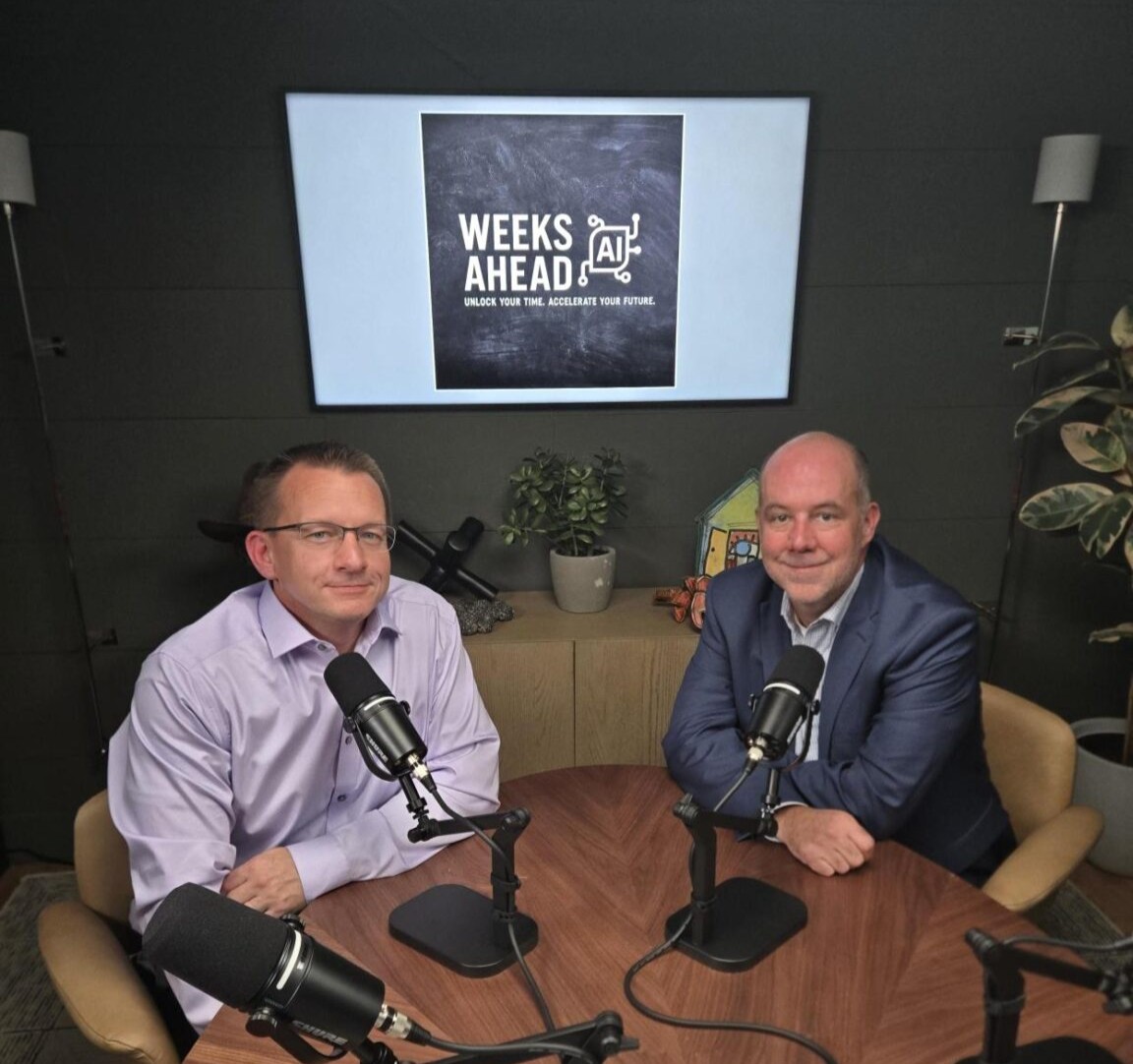
In October 2025, Brian Davis and Joe Craven of Aligned Technology Partners (formerly On-Site PC Services) joined the Weeks Ahead AI podcast to talk through this. ATP is a managed IT and cybersecurity firm in Roanoke, Texas, working with 135+ businesses across North Texas since 2001. What follows is the substance of that conversation, organized for a business owner rather than an audience of technologists.
Where AI is already working, quietly
Most of the real value is running underneath tools you already own.
Threat detection: Modern endpoint and email security products use behavioral models to flag activity that does not match a normal pattern. An account logging in from two states in ten minutes. A file encryption process starting at 2 AM on a workstation that has never done that. These systems catch things signature-based tools miss, because they are looking at behavior rather than matching known bad files.
Phishing analysis: Email filtering has gotten meaningfully better at spotting messages that impersonate a vendor or an executive, including ones with no attachment and no link.
Patch and vulnerability prioritization: Instead of a list of 400 pending updates, the useful tools now rank them by actual exposure in your environment.
None of this requires you to have an AI strategy. It requires your provider to have chosen tools that do this work and to have configured them properly.
The shift from reactive to predictive is the Advance pillar in plain terms: using technology intentionally to create momentum rather than to clean up after problems.
Where it goes wrong for a business without guardrails
Now the other side, and this is the part that gets underdiscussed.
Picture an electrical contractor in Haslet with about 40 employees, a dozen field crews, and one office manager handling scheduling, invoicing, and customer communication. She is good at her job and perpetually behind.
She discovers that a free AI writing tool makes her customer emails faster. So she starts pasting job details in: addresses, scope notes, pricing from a bid, occasionally a customer's contact information. It works well. Within a month, two other people in the office are doing the same thing on their personal accounts.
Nobody did anything malicious. But the company's pricing structure, customer list, and job history are now sitting in accounts the business does not control, under terms of service nobody read, on a platform that may or may not be using that content for training.
This is the most common AI risk for a small business, and it has nothing to do with sophisticated attacks. It is ordinary employees solving ordinary problems with tools the company never approved.
The fix is not prohibition. Blanket bans get ignored and push usage underground. The fix is a short, readable policy and a sanctioned tool. Provide an approved option inside your Microsoft 365 tenant, with data handling that meets your obligations, and the exposure closes.
The final touch should always be human. That applies to more than writing. It applies to any output you would be uncomfortable defending to a customer.
What AI changes for field-based businesses
Skilled trades operations have a specific set of pressures: dispatch, scheduling, estimates, invoicing, and constant customer communication, all while the people doing the work are not at a desk.
There are three areas where AI capability is genuinely useful for skilled trades businesses today. Call and message summarization turns a long customer call or a thread of texts into a clean job note, which saves the office real time and reduces detail lost in translation to the crew. Document handling pulls line items out of a supplier invoice or a submitted bid, so nobody is retyping numbers into accounting software. Scheduling logic in field service platforms is getting better at proposing routes and assignments based on location, skill, and job duration.
What is not ready: anything where a wrong answer reaches a customer without review. AI-generated estimates, unreviewed customer communication, and automated commitments about timing all carry more downside than upside right now.
A responsible way to adopt this
The sequence matters more than the specific tools.
First, find out what your team is already using. You almost certainly have AI usage you do not know about, so ask before you legislate. Second, secure the data. Access controls, MFA, and clear permissions need to be in place before you connect automation to anything, because automating a poorly permissioned environment just makes the problems move faster. Third, write one page of policy: what is approved, what data never goes into an external tool, and who to ask. One page that people read beats twelve that they do not. Fourth, pilot narrow: one team, one use case, a defined period, and an honest assessment at the end. Fifth, review what it produced. If the output needed heavy correction every time, the tool was not the right fit for that task.
Our vCIO services exist for exactly this kind of decision: what is worth investing in, what is premature, and how a specific business should sequence it. Our cybersecurity work covers the data-protection side that has to come first.
Where to start
If your team is already using AI tools and nobody has written anything down, start there. It takes one conversation to find out, and the exposure is usually simple to close.
We will sit down for a technology roadmap conversation: where AI fits in your environment, what needs securing before you automate anything, and which pieces are worth doing this year.
Call 817-306-6106 or reach us through our contact page. Aligned Technology Partners, 1415 Cannon Pkwy, Suite 120, Roanoke, Texas 76262.
What business problem can we help you solve?
AI isn't replacing IT. It's amplifying it. It's helping businesses move from reactive to predictive, spotting issues before they cause downtime or risk.
AI should enhance your voice, not replace it. The final touch should always be human.
About Aligned Technology Partners
Aligned Technology Partners (ATP) is a managed IT and cybersecurity provider based in Roanoke, Texas, serving the Dallas-Fort Worth area since 2001. ATP supports more than 135 organizations across healthcare, legal, and skilled trades with help desk support, proactive maintenance, cybersecurity, cloud solutions, and project management. The company’s focus is simple: dependable technology and responsive service that let clients run their businesses without worrying about IT.
Learn more at alignedtechpartners.com.
Media Contact
Brian Davis
President
Aligned Technology Partners
Tags
- Company News